How to Stop Sneakers from Creasing Without Hard Plastic Inserts: 9 Comfortable Alternatives
Hard plastic crease guards get the job done — but they can pinch your toes, trap heat, and make your favourite kicks feel like foot prisons. The good news? You have plenty of comfortable, effective methods that keep your sneakers looking box-fresh without a slab of rigid plastic sitting on top of your toes.
Below you will find nine field-tested techniques, a step-by-step guide for removing existing creases, and answers to the questions sneakerheads ask most.
Why Do Sneakers Crease in the First Place?
Every time you take a step your foot flexes at the toe joint, and the upper material bends with it. Over time those repeated bends compress the material into visible creases — especially across the toe box. As Nike explains, the natural movement of your foot bends your shoe, causing it to crease over time.
Leather, synthetic leather, canvas, and even knit uppers are all susceptible.
Several factors accelerate the process:
- Poor fit — Shoes that are too big allow extra internal movement, while overly tight shoes stress the material in concentrated areas.
- Moisture — Foot sweat softens leather, making it crease faster and deeper when bent.
- Wearing the same pair daily — The material never gets a chance to rest and recover its shape.
9 Ways to Prevent Sneaker Creases Without Rigid Plastic Inserts
1. Use Cedar Shoe Trees After Every Wear
Shoe trees are the gold standard of crease prevention for good reason. When inserted into shoes after wearing, these wooden tools help stretch the leather back into its original form, preventing creases from settling. Premium cedar shoe trees also absorb moisture, which further helps maintain the leather's integrity. Place them in your sneakers the moment you take them off and leave them in until your next wear.
2. Get the Right Fit From Day One
This is the single most overlooked crease-prevention step. Shoes that are too tight or too loose cause uneven pressure, leading to more pronounced creases. Visit a proper fitting specialist or at least measure both feet at the end of the day when they are at their largest. A snug — not tight — toe box leaves less room for the upper to fold inward.
3. Rotate Your Sneakers Regularly
Never wear the same pair of leather sneakers two days in a row. Leather absorbs moisture from foot sweat, and wet leather creases faster and deeper. Give each pair at least 24 hours to dry out and rest between wears. A simple three-pair rotation can double the lifespan of each sneaker in your collection.
4. Stuff With Rolled Socks or Newspaper When Storing
No shoe tree handy? Keep the cardboard inserts that came with the shoes, or stuff the toe box firmly with balled-up socks or crumpled newspaper. Old paper such as newspaper works well, and even a few pairs of socks make a great substitute. The goal is to fill the void inside the toe box so the upper dries in its natural shape rather than sagging into a crease.
5. Condition and Moisturise Leather Uppers
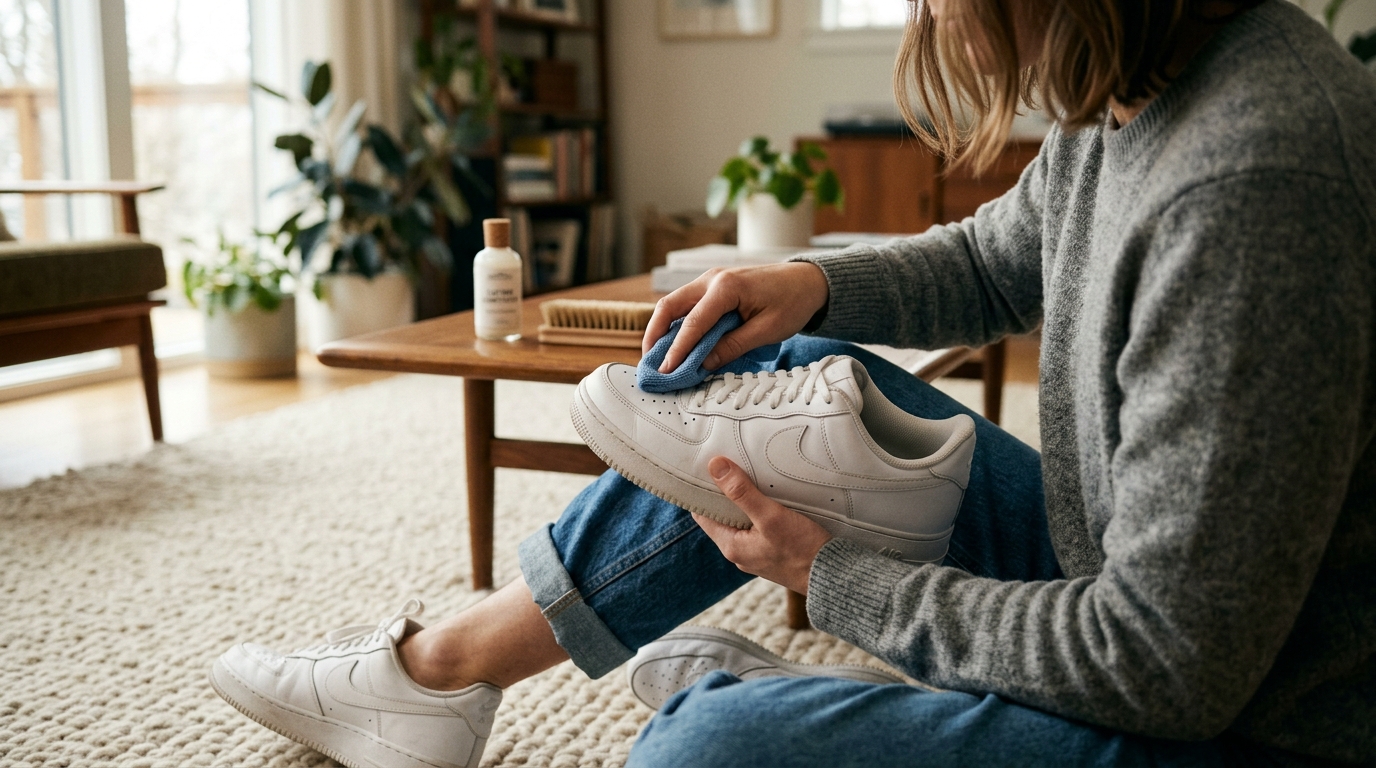
Regular cleaning and conditioning of leather shoes keeps the material supple and less prone to drying and creasing. Use a quality leather conditioner every two to three weeks on frequently worn pairs. Apply a thin layer, massage it into the leather with a microfibre cloth, and let it absorb before your next wear. Supple leather bends without forming a sharp, permanent fold.
6. Lace Your Shoes Properly Every Time
Properly laced shoes distribute pressure evenly across your feet, minimising creases. Many people rush out the door with half-tied laces, allowing the foot to shift forward and crunch the toe box. Take ten extra seconds to snug up your laces from the bottom eyelets upward for an even hold.
7. Use a Shoehorn When Putting Shoes On
Forcing your heel past the collar bends and crushes the back of the shoe, creating rear creases over time. A shoehorn lets your foot slide in cleanly. You can pick one up at virtually any retailer that sells shoes, and long-handled versions mean you do not even need to bend down.
8. Apply a Water-Repellent Spray
Moisture from rain, puddles, or even humid air softens shoe materials and accelerates creasing. A water-repellent spray creates a protective barrier without making the shoe stiff. Apply it to clean, dry sneakers and reapply every few weeks depending on your climate.
9. Walk With Intention — Minimise Toe Flex
How you walk genuinely affects shoe creasing. Landing with your whole foot rather than bending excessively at the toes reduces unnecessary stress on the toe box. This does not mean walking unnaturally — simply being mindful of rolling through your full foot instead of pushing off sharply from the toes can make a measurable difference over dozens of wears.
How to Remove Existing Creases: The Damp-Towel Iron Method
Already dealing with creases? Here is the most popular restoration technique used by sneaker enthusiasts worldwide.
- Stuff the toe box tightly — Pack in socks, newspaper, or a shoe tree until the leather is stretched flat and the crease visually disappears.
- Dampen a clean, white cotton towel — It should be moist, not dripping. Use a white towel to avoid colour transfer onto light-coloured uppers.
- Set your iron to medium heat, no steam — Place the damp towel directly over the creased area.
- Iron in short intervals — Gently iron over the towel for 10–15 seconds at a time in small circular motions. Lift and check frequently.
- Cool down with stuffing in place — Leave the shoe packed until it cools completely to set the shape.
- Condition the leather afterward — Heat can dry out leather, so follow up with a conditioning treatment to keep the material healthy.
Blow-dryer alternative: If you do not own an iron, a hair dryer on a low heat setting held 8–10 inches from the shoe works well for leather sneakers. Massage the warm leather against the shoe tree with your finger and repeat until the crease fades.
Common mistakes to avoid:
- Ironing dry leather — the moisture from the towel is essential for transferring heat safely.
- Using a coloured towel on white shoes — dye can transfer onto the upper.
- Holding the iron in one spot — keep it moving to prevent scorching.
Quick-Reference Comparison: Crease Prevention Methods at a Glance
| Method | Cost | Comfort Impact | Effectiveness |
|---|---|---|---|
| Cedar shoe trees | $10–$25 per pair | None (used when not wearing) | High |
| Proper fit | Free | Positive | High |
| Sneaker rotation | Requires multiple pairs | None | High |
| Sock / newspaper stuffing | Free | None (used when not wearing) | Medium |
| Leather conditioner | $8–$15 | None | Medium-High |
| Proper lacing | Free | Positive | Medium |
| Shoehorn | $5–$12 | Positive | Medium (prevents heel creasing) |
| Water-repellent spray | $10–$18 | None | Medium |
| Mindful walking gait | Free | Neutral | Low-Medium |
Key Takeaways
- You do not need hard plastic inserts to fight creasing — cedar shoe trees, proper fit, and rotation are more effective long-term strategies.
- Keeping leather supple with regular conditioning prevents sharp, permanent folds from forming.
- For existing creases, the damp-towel iron method is widely regarded as the most effective DIY fix — just keep the iron moving and always use a white towel on lighter shoes.
- Combining three or four methods (shoe trees + rotation + conditioning + proper lacing) produces far better results than relying on any single technique.
Frequently Asked Questions
Can you really prevent sneaker creases without any inserts at all?
Yes. Creases are a natural result of foot movement, so you cannot eliminate them entirely, but using shoe trees after each wear, choosing correctly sized shoes, and rotating pairs dramatically slows the process. Many sneakerheads report minimal visible creasing after 10 or more wears when combining these habits.
Do shoe trees work for sneakers or just dress shoes?
Shoe trees work for any closed-toe shoe. Cedar shoe trees are especially beneficial because they absorb moisture while holding the shape. For sneakers with softer uppers like Nike Dunks or Air Force 1s, a spring-loaded cedar tree fits well and keeps the toe box smooth.
What is the best free method to stop creasing?
Stuffing your sneakers with balled-up newspaper or clean socks immediately after wearing them costs nothing and is highly effective. Combine that with mindful lacing and a proper fit for the best zero-cost crease prevention routine.
Is the iron method safe for all sneaker materials?
The damp-towel iron technique works best on leather and faux leather. For suede, wring the towel as dry as possible since water and suede are not an ideal combination. Knit and mesh uppers respond better to a gentle steamer held a few inches away from the surface.
How often should I condition leather sneakers to prevent creases?
For pairs you wear once or twice a week, conditioning every two to three weeks is a solid cadence. If you wear them less frequently, once a month keeps the leather pliable enough to resist sharp folds.
Final Thoughts
Hard plastic crease guards have their place, but they are far from the only option — and for many sneaker lovers they are not even the best one. A combination of cedar shoe trees, a smart rotation schedule, leather conditioning, and proper sizing will keep your kicks looking crisp far longer than any single rigid insert ever could. Start with the free methods today, invest in a pair of quality cedar trees this week, and you will notice the difference by your next wear.