
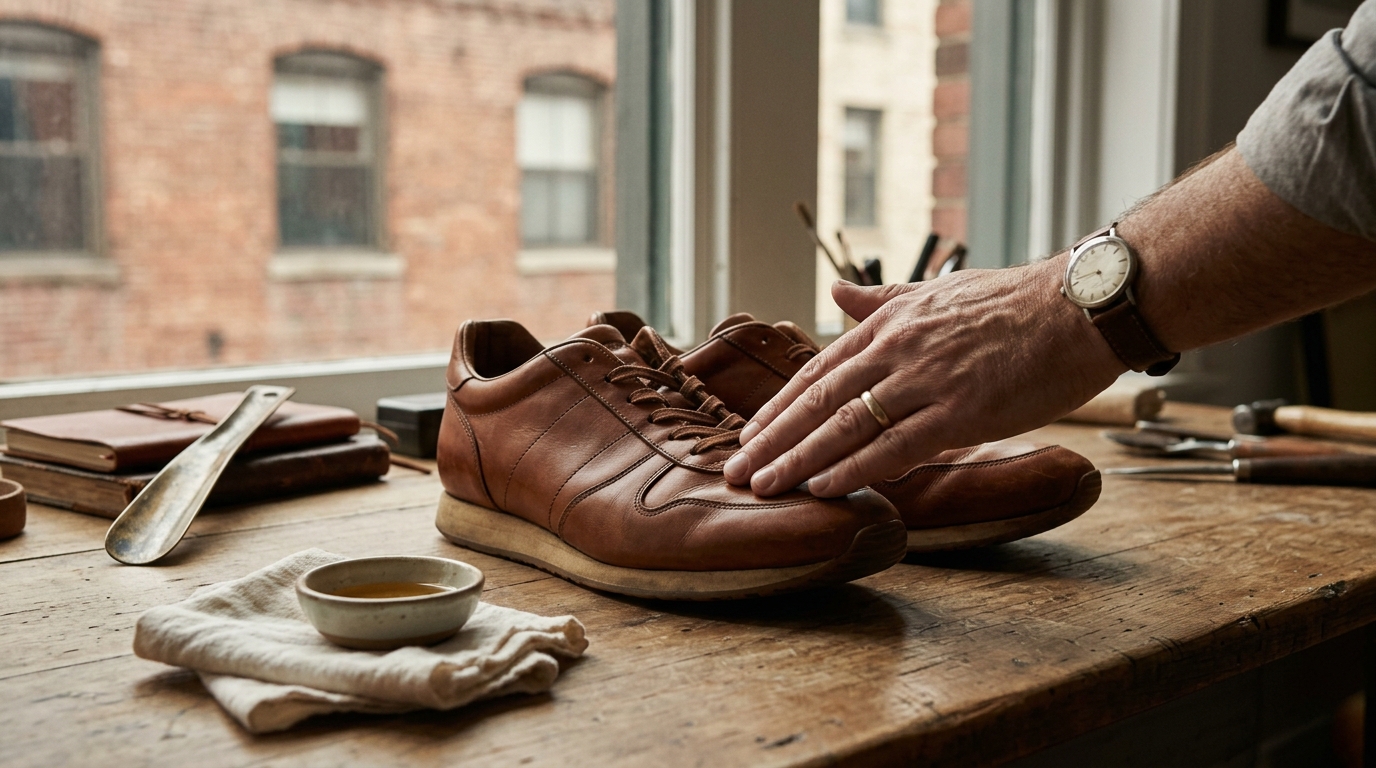
How to Remove Creases From Shoes Without Damaging Them
Shoe creases are inevitable. Every time you walk, your foot bends, and that repeated motion causes the upper material to fold and wrinkle over time. Whether you own leather sneakers, canvas kicks, or suede boots, creases will eventually appear. The good news is you do not have to live with them. With the right techniques, you can smooth out creases on old shoes safely and restore that fresh-out-of-the-box look. Below, we cover proven methods that work on different materials, plus tips for preventing future creases so your collection stays clean for longer.
Why Shoes Crease in the First Place
A shoe crease is a visible fold or line that forms in the upper material of a shoe, typically across the toe box. It happens because your foot flexes with every step. According to Nike's shoe care guide, the natural movement of your foot bends the shoe, causing the material to compress over time.
Several factors speed up creasing. Shoes that are too loose or too tight bend more aggressively in the wrong spots. Poor storage without support allows the material to collapse. Moisture from sweat or rain softens leather and fabric, making them fold more easily. Understanding these causes helps you choose the right fix.
Preparation Steps Before You Start
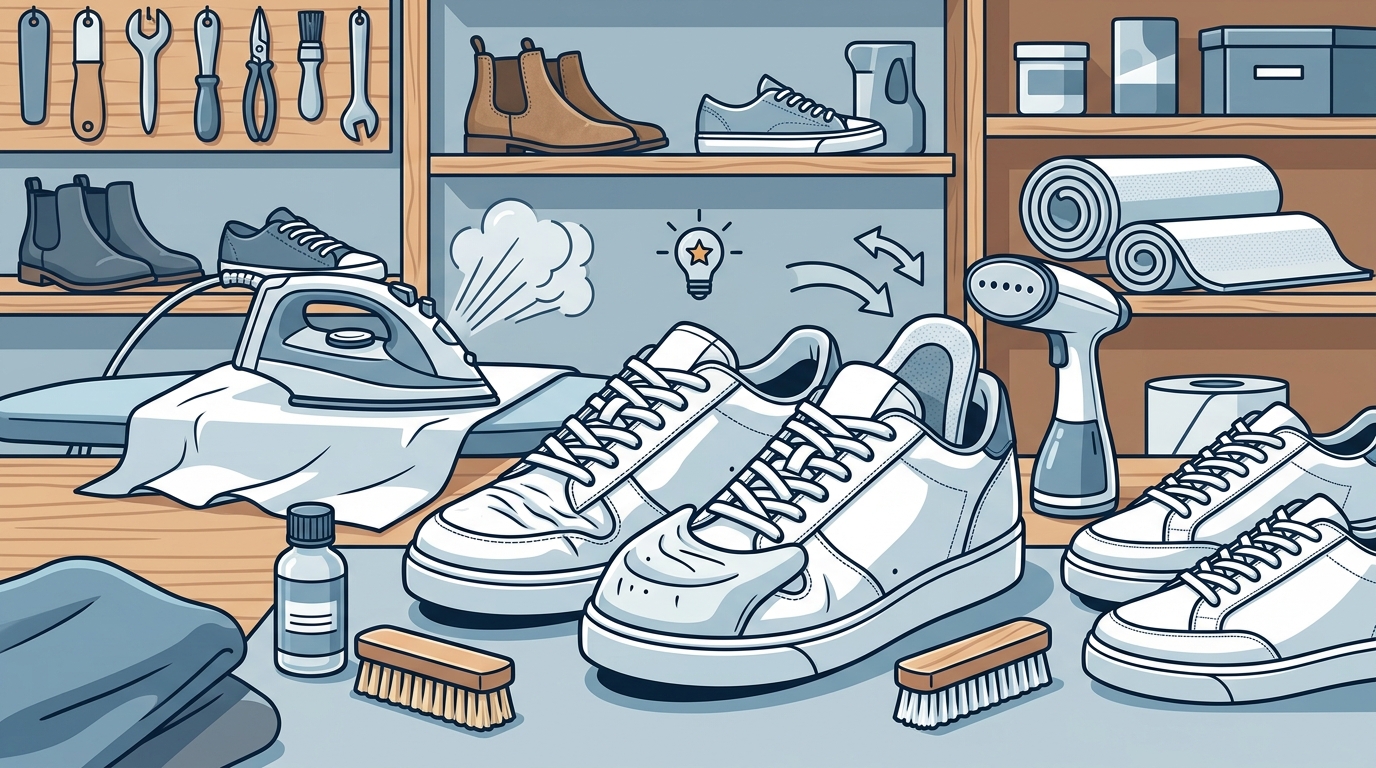
Before attempting any crease removal method, proper preparation protects your shoes from further damage. Follow these steps first:
Clean the Surface
Remove dirt and debris using a soft brush or damp cloth. Particles trapped in creases during the repair process can scratch the material.
Remove the Laces
Taking out laces gives you full access to the creased toe box area and keeps the laces out of harm's way.
Insert Shoe Trees or Stuffing
A shoe tree is a foot-shaped insert, usually made from cedar or plastic, designed to hold a shoe's shape. Stuff your shoes firmly with shoe trees, balled-up newspaper, or clean socks. Packing the toe box tightly helps straighten out creases during treatment.
Method 1: The Iron and Damp Towel Technique
This is the most popular method for leather shoes. The combination of heat and moisture softens the material so it can be reshaped. Here is how to do it safely:
- Stuff the shoe firmly with a shoe tree or newspaper.
- Dampen a thin cotton towel and wring it out well.
- Place the damp towel directly over the creased area.
- Set your iron to low or medium heat (no steam setting needed).
- Gently press the iron over the towel for 5 to 10 seconds at a time.
- Lift, check progress, and repeat as needed.
- Let the shoe cool completely before removing the stuffing.
Important: Never place the iron directly on the shoe. The towel acts as a buffer to prevent scorch marks. This method works best on leather and synthetic leather. Avoid it on suede or mesh materials.
Method 2: Hair Dryer or Heat Gun
A hair dryer is a safer, more beginner-friendly option for crease removal. It works on leather, synthetic, and fabric shoes.
- Insert shoe trees or stuff shoes tightly.
- Set the hair dryer to medium heat.
- Hold it about 6 inches from the creased area.
- Move the dryer back and forth for 20 to 30 seconds.
- While the material is warm, gently massage the crease with your fingers.
- Let the shoe cool and check your results.
After using heat on leather, follow up with a leather conditioner to prevent drying and cracking. This step is often overlooked but makes a big difference in longevity.
Method 3: Steam Treatment
Steam is a gentle way to relax shoe materials without direct contact. It is ideal for delicate shoes or luxury leather that you do not want to risk with an iron.
- Boil water in a kettle or use a handheld garment steamer.
- Hold the shoe 6 inches above the steam source for about 30 seconds.
- Gently massage the creased area as the material softens.
- Insert a shoe tree and let the shoe dry naturally.
Be careful not to oversaturate the shoe with moisture. Quick, controlled exposure is all you need.
Method 4: No-Heat Alternatives
If you prefer to avoid heat entirely, you still have effective options.
Leather Conditioner
A leather conditioner is a moisturizing product that softens leather and restores flexibility. Apply it to the entire shoe using a microfiber cloth, spending extra time on creased areas. Let it sit overnight with shoe trees inserted. Regular conditioning also prevents future creases.
Shoe Trees Alone
Simply inserting cedar shoe trees after every wear gradually reduces creasing over time. Cedar also absorbs moisture and eliminates odor, keeping your shoes fresh between wears.
Rubbing Alcohol Solution
Mix equal parts water and rubbing alcohol, then rub the mixture into creased areas. This softens the material enough to reshape it without heat. It works well for mild creases on casual sneakers.
Method 5: Use Crease Protectors for Prevention and Repair
The best approach to creases is stopping them before they start. A crease protector is an insert placed inside the toe box to reinforce the upper material and prevent it from folding during wear.
Traditional plastic crease protectors are rigid and uncomfortable. Crease Beast's Ultimate Kit solves that problem with 100% memory foam inserts that allow your feet to flex naturally. The kit includes four thickness options so you can match the insert to any sneaker in your collection, from Air Force 1s to Jordan 1s.
What makes Crease Beast's Starter Kit stand out is its reusability. Unlike single-use protectors, one set works across most pairs in your rotation. They are available in men's, women's, and kid's sizes, making them accessible for the whole family.
For shoes that already have creases, wearing memory foam crease protectors during regular use gradually pushes the material back into its original shape while preventing further damage.
Crease Removal Methods Compared
| Method | Best For | Difficulty | Risk Level | Time Required |
|---|---|---|---|---|
| Iron + Damp Towel | Leather shoes | Moderate | Medium (burn risk) | 10-15 min |
| Hair Dryer | All materials | Easy | Low | 10-20 min |
| Steam | Delicate/luxury leather | Easy | Low | 10-15 min |
| Leather Conditioner | Leather only | Easy | Very low | Overnight |
| Shoe Trees | All materials | Very easy | None | Ongoing |
| Crease Protectors | All sneakers | Very easy | None | During wear |
Key Takeaways
- Shoe creases are caused by natural foot movement, poor fit, and improper storage.
- Always clean your shoes and insert stuffing before attempting any crease removal method.
- The iron-and-towel method is effective for leather but carries the highest risk of damage.
- A hair dryer on medium heat is the safest heated method for beginners.
- No-heat options like leather conditioner and shoe trees work well for mild creases.
- Memory foam crease protectors from Crease Beast both prevent new creases and help remove existing ones.
- Always follow up heat treatments with leather conditioner to prevent material from drying out.
Frequently Asked Questions
Can you fully remove deep creases from old shoes?
Deep creases can be significantly reduced but may not disappear entirely on heavily worn shoes. Combining heat methods with regular use of crease protectors delivers the best long-term results.
Will ironing damage my sneakers?
Ironing can damage shoes if done improperly. Always use a damp cloth between the iron and the shoe, keep the heat on low, and never hold the iron in one spot for more than 10 seconds.
What is the safest method for removing shoe creases?
Using shoe trees combined with leather conditioner is the lowest-risk method. For faster results, a hair dryer on medium heat held 6 inches away is safe for most materials.
Do crease protectors actually work?
Yes. Crease protectors reinforce the toe box to prevent the upper material from folding. Memory foam versions like those from Crease Beast are especially effective because they conform to your foot and the shoe's shape.
Can I remove creases from suede shoes?
Suede requires extra caution. Avoid excessive moisture and direct heat. Steam from a safe distance is the best option for suede. Always use a suede brush afterward to restore the nap.
How often should I condition my leather shoes?
Condition leather shoes every 3 to 4 weeks with regular wear, or after any heat-based crease removal treatment. Conditioning keeps the leather supple and less prone to folding.
Are memory foam crease protectors comfortable to walk in?
Traditional rigid plastic protectors are notoriously uncomfortable. Memory foam alternatives, like the Crease Beast, allow natural foot flexion and are designed for all-day wear without the stiff "duck walk" feeling.
Can I use these methods on Jordan 1s and Air Force 1s?
Absolutely. Both models respond well to iron, hair dryer, and steam methods. For ongoing protection, the Crease Beast Ultimate Kit includes multiple insert thicknesses specifically designed for varying toe box sizes on popular sneaker models.
Protect Your Sneakers Today
Do not wait until creases get worse. Visit the Crease Beast shop to explore premium memory foam crease protectors available in men's, women's, and kid's sizes. Keep every pair in your collection looking fresh.