
Memory Foam vs Plastic Crease Protectors: Which Is Best for Your Sneakers?
Sneaker creases are inevitable. Every step bends the toe box, and over time those wrinkles become permanent. Crease protectors solve the problem by reinforcing the toe box from the inside, but the material they are made from changes everything about comfort, durability, and effectiveness. In this comparison, we break down memory foam crease protectors, rigid plastic shields, silicone inserts, and DIY methods so you can pick the right solution for your collection. Whether you rock Air Force 1s, Jordan 1s, or Dunks, the right protector keeps your kicks looking box-fresh without sacrificing your natural stride.
What Are Crease Protectors?
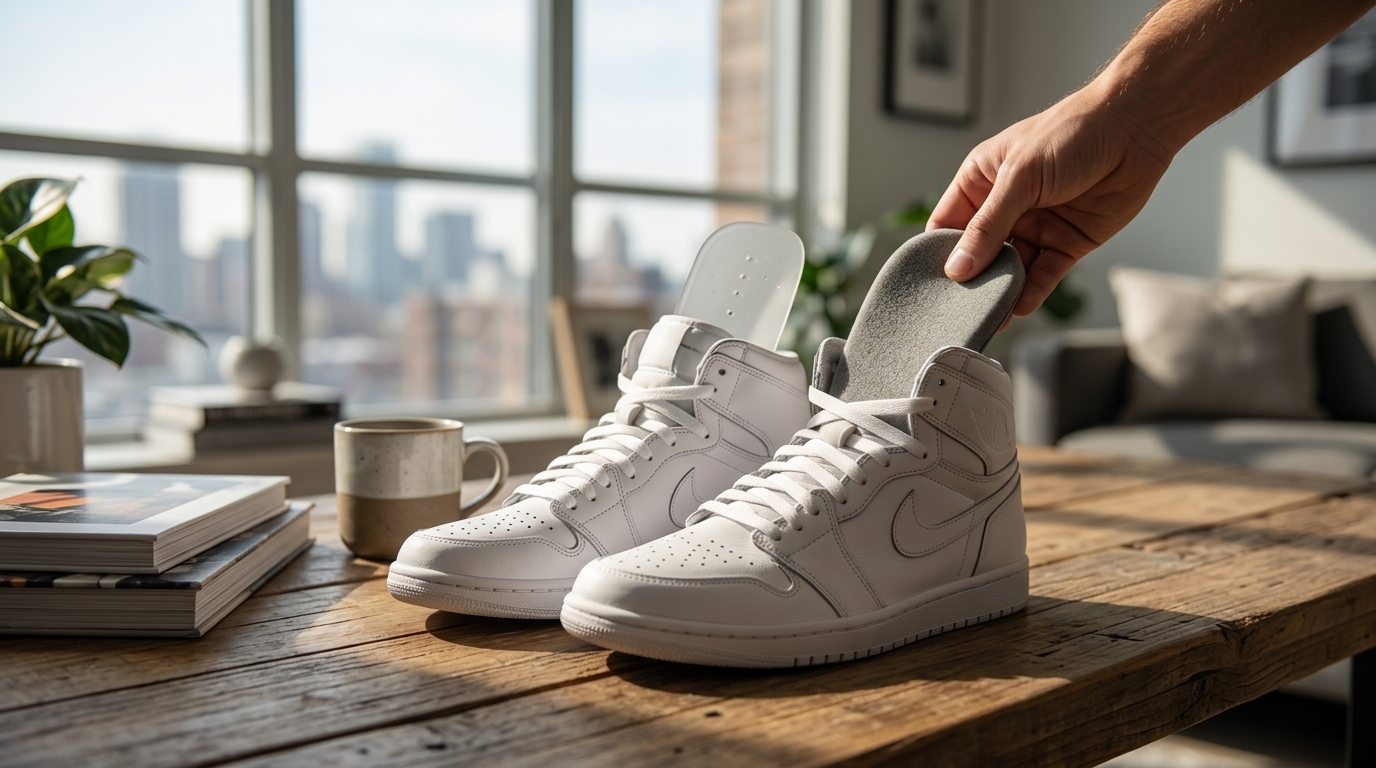
A crease protector is an insert that slides inside your shoe to reinforce the toe box and prevent wrinkles from forming as you walk. They work by filling the negative space between the top of your foot and the upper material of the shoe, keeping the panel rigid enough to resist bending.
Without protection, natural foot flexion causes deep lines across the toe box, especially in leather and synthetic uppers. Crease protectors target that exact stress point, and they come in a range of materials from hard plastic to premium memory foam.
Types of Crease Protectors
Rigid Plastic Shields
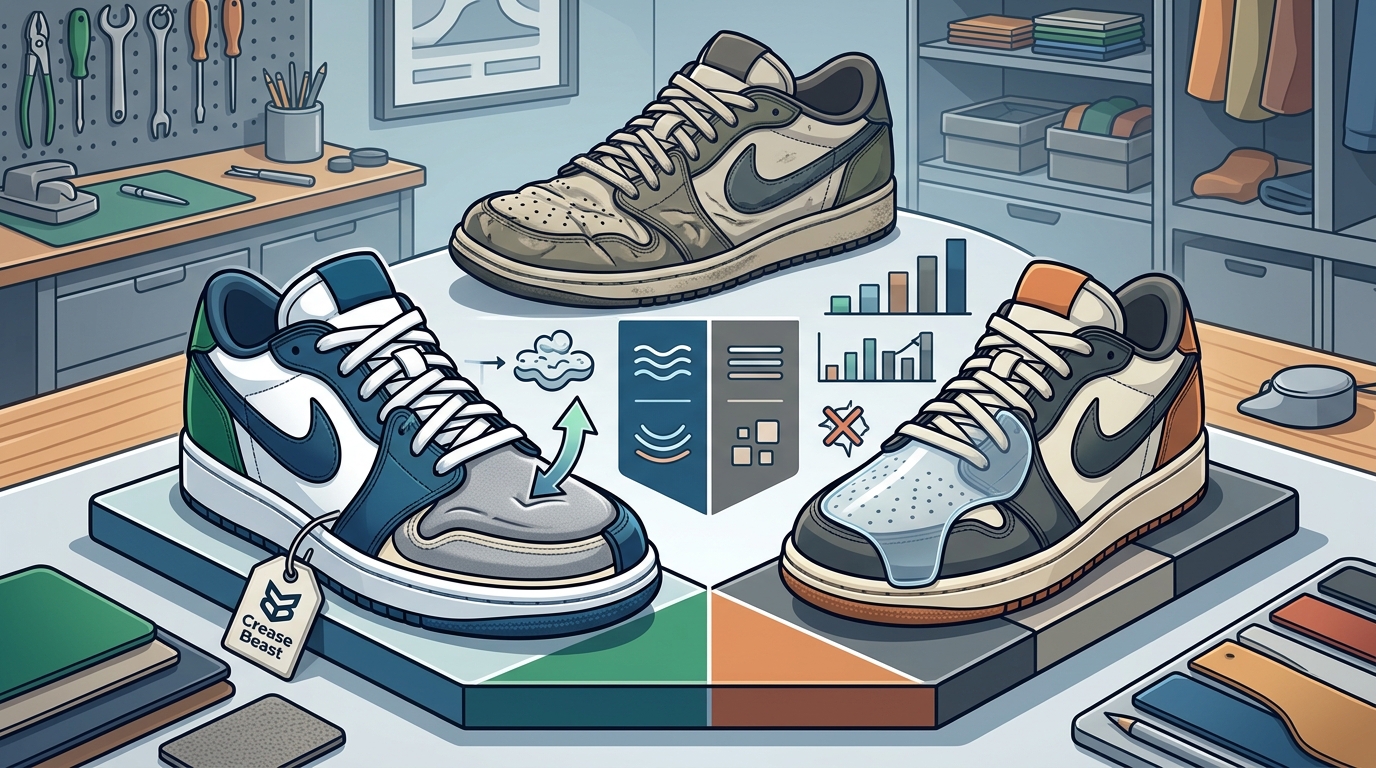
Rigid plastic crease protectors are the most common and budget-friendly option. They are made from polyethylene (PE) or thermoplastic elastomer (TPR) and usually feature ventilation holes and trim-to-fit guidelines. While effective at blocking creases, they are stiff and can press uncomfortably against the top of your toes during extended wear.
Memory Foam Inserts
A memory foam crease protector is a soft, moldable insert that conforms to the shape of your toe box. Unlike plastic shields, memory foam compresses and rebounds with each step, allowing your feet to bend naturally. Crease Beast memory foam protectors are engineered to push out existing creases while preventing new ones, something rigid inserts cannot do.
Silicone and Hybrid Guards
Silicone crease guards sit between plastic and foam in terms of flexibility. They offer moderate comfort but tend to slide inside the shoe without an adhesive or sock-based system to hold them in place.
DIY Methods
Some sneakerheads stuff tissue paper or use an iron with a damp towel to remove creases. These methods are free but temporary, and ironing carries a real risk of heat damage to the upper material.
Head-to-Head Comparison Table
| Feature | Memory Foam (e.g., Crease Beast) | Rigid Plastic / TPR | Silicone | DIY (Stuffing / Iron) |
|---|---|---|---|---|
| Comfort | High — molds to foot | Low to Medium | Medium | N/A |
| Crease Prevention | Excellent | Good | Good | Temporary |
| Removes Old Creases | Yes | No | No | Partially |
| Reusable Across Shoes | Yes | Limited | Limited | No |
| Natural Foot Flex | Yes | Restricted | Moderate | N/A |
| Available Sizes | Men, Women, Kids | S / L only | S / L only | N/A |
| Average Price Per Pair | $20 – $25 | $6 – $12 | $10 – $15 | Free |
Comfort and Wearability
Comfort is the single biggest differentiator. Rigid plastic protectors are notorious for pressing against the top of the foot and limiting natural movement. Many sneakerheads report having to buy shoes a half size up just to accommodate the insert.
Memory foam protectors solve this problem. The Crease Beast Slim, for example, uses ultra-lightweight foot sleeves paired with cloud-soft memory foam that allows your feet to bend naturally while you walk. The sock-based sleeve system also prevents sliding, an issue that plagues loose plastic and silicone inserts.
If you plan to wear protectors all day, memory foam is the clear winner. Plastic shields work fine for short outings or shoe storage, but extended wear often becomes uncomfortable.
Effectiveness at Preventing and Removing Creases
Both plastic and memory foam protectors do a solid job preventing new creases. The real difference appears with existing creases. Memory foam expands to fill the negative space inside the toe box, actively pushing outward against old crease lines. Rigid plastic sits flat and cannot conform to uneven surfaces, so it prevents further damage but will not reverse what is already there.
Crease Beast is the only crease protector brand that markets this dual capability: it prevents creases in new shoes and knocks out creases in old shoes. If your collection includes well-worn pairs that need restoration, this matters.
Durability and Long-Term Value
Plastic shields are cheap upfront but often need replacing as the material cracks or warps. Memory foam protectors cost more initially but last longer thanks to the material's ability to rebound to its original shape.
Because Crease Beast protectors are reusable across multiple pairs, you do not need a separate set for every shoe. This makes them the less expensive option over time compared to buying plastic guards for each sneaker in your rotation. The brand offers sizes for women and kids as well, covering the whole household.
Key Takeaways
- A crease protector is an insert placed inside the toe box to prevent shoe wrinkles during walking.
- Memory foam protectors offer significantly more comfort than rigid plastic or silicone alternatives.
- Only memory foam inserts can both prevent new creases and push out existing ones.
- Plastic shields are budget-friendly but restrict natural foot movement and may require upsizing shoes.
- Reusable memory foam protectors like Crease Beast provide better long-term value despite a higher upfront cost.
- DIY methods like ironing or stuffing are temporary fixes that risk damaging shoe materials.
- Crease Beast is available in men's, women's, and kids' sizes, making it the most inclusive option on the market.
Frequently Asked Questions
Do crease protectors actually work?
Yes. Crease protectors reinforce the toe box from the inside, reducing or eliminating the bending that causes wrinkles. Both plastic and memory foam versions are effective at prevention, though memory foam also helps reverse existing creases.
Are memory foam crease protectors more comfortable than plastic ones?
Absolutely. Memory foam molds to the shape of your foot and toe box, allowing natural movement. Plastic inserts are rigid and can cause pressure on the top of the foot, especially during long wear.
Can I use crease protectors with any sneaker?
Most crease protectors work with popular silhouettes like Air Force 1s, Jordan 1s, Dunks, and New Balance models. Crease Beast products are designed to be reusable with most shoes that have a standard toe box.
Do I need to buy a bigger shoe size for crease protectors?
With rigid plastic inserts, many users go up a half size for comfort. Memory foam protectors like Crease Beast are designed to work with your true shoe size because the foam compresses rather than adding bulk.
How long do crease protectors last?
Plastic shields typically last a few months before cracking. Quality memory foam protectors can last a year or longer with regular use because the foam rebounds to its original shape after each wear.
Can crease protectors remove creases from old shoes?
Memory foam protectors can push out existing creases over time by filling the negative space inside the toe box. Plastic shields cannot do this because they do not conform to uneven surfaces.
Are crease protectors worth the investment?
If you care about keeping your sneakers looking fresh, yes. A single reusable memory foam protector that works across your collection is more cost-effective than replacing cheap plastic inserts for every pair.
What sizes do Crease Beast protectors come in?
Crease Beast offers sizes for men (8-12.5), women (5-8.5), and kids (grade school 3-7), making it one of the most size-inclusive crease protector brands available.
Protect Your Sneaker Collection Today
Ready to keep every pair in your rotation crease-free and comfortable? Browse the full Crease Beast product lineup and find the right size for your sneakers. Your kicks deserve better than cheap plastic.