
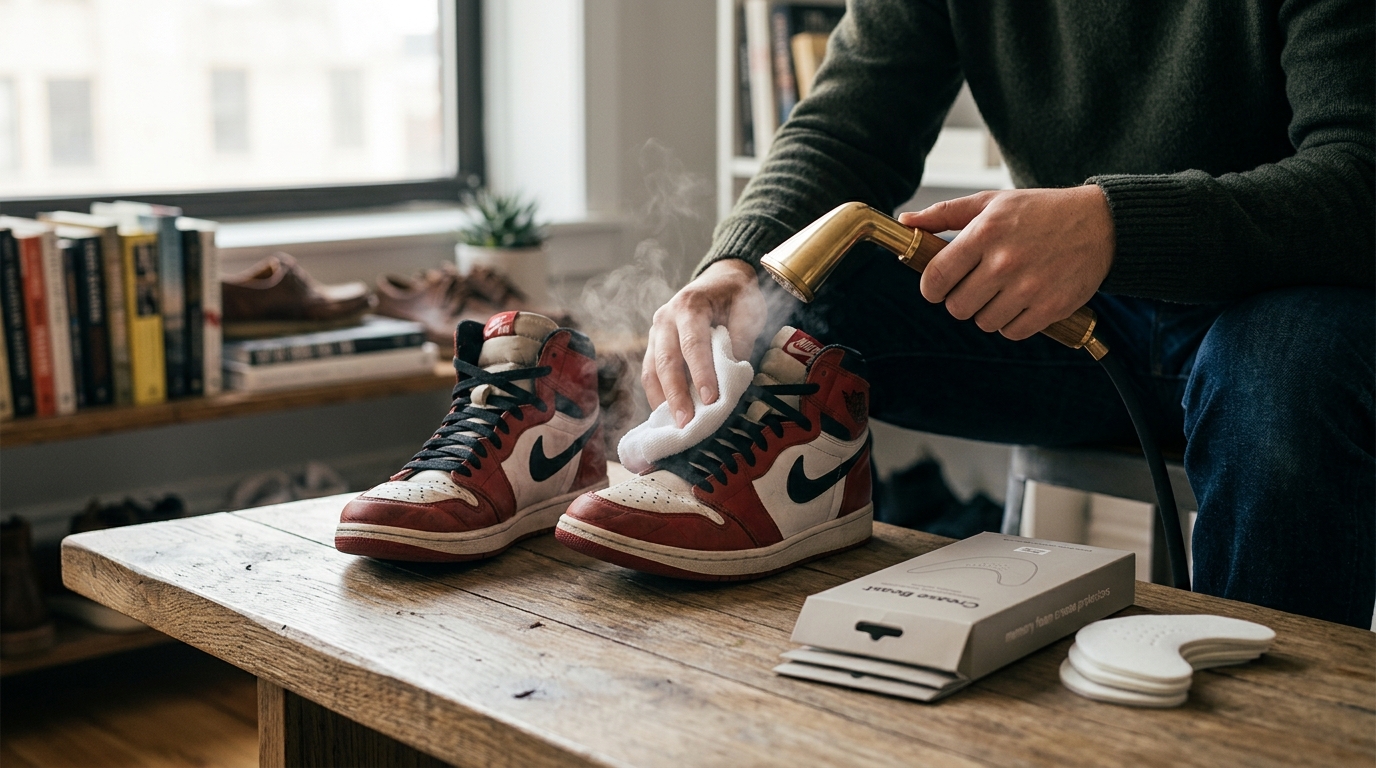
Creases on your favorite sneakers can make even a premium pair look worn out before its time. The good news is that most shoe creases are completely reversible when you use the right techniques. Whether you own leather Jordans, canvas Dunks, or everyday Air Force 1s, this guide walks you through proven, damage-free methods to restore your kicks. We will also cover long-term prevention strategies, including how memory foam crease protectors can knock out existing creases and stop new ones from forming.
Why Shoes Crease in the First Place
Shoe creasing is a natural result of how your foot moves. Every time you walk, your toes and the ball of your foot flex, causing the upper material to fold at the toe box. A shoe crease is a visible fold line that forms where the upper material bends repeatedly during wear.
Several factors accelerate creasing. Shoes that are too big create extra space between the foot and upper, leading to deeper folds. Poor-quality materials, improper storage, and humidity also play a role. Understanding these causes helps you choose the right fix and prevention method.
Prepare Your Shoes Before Any Method
Preparation is the difference between a successful restoration and accidental damage. Before you apply any crease-removal technique, follow these steps:
Clean First
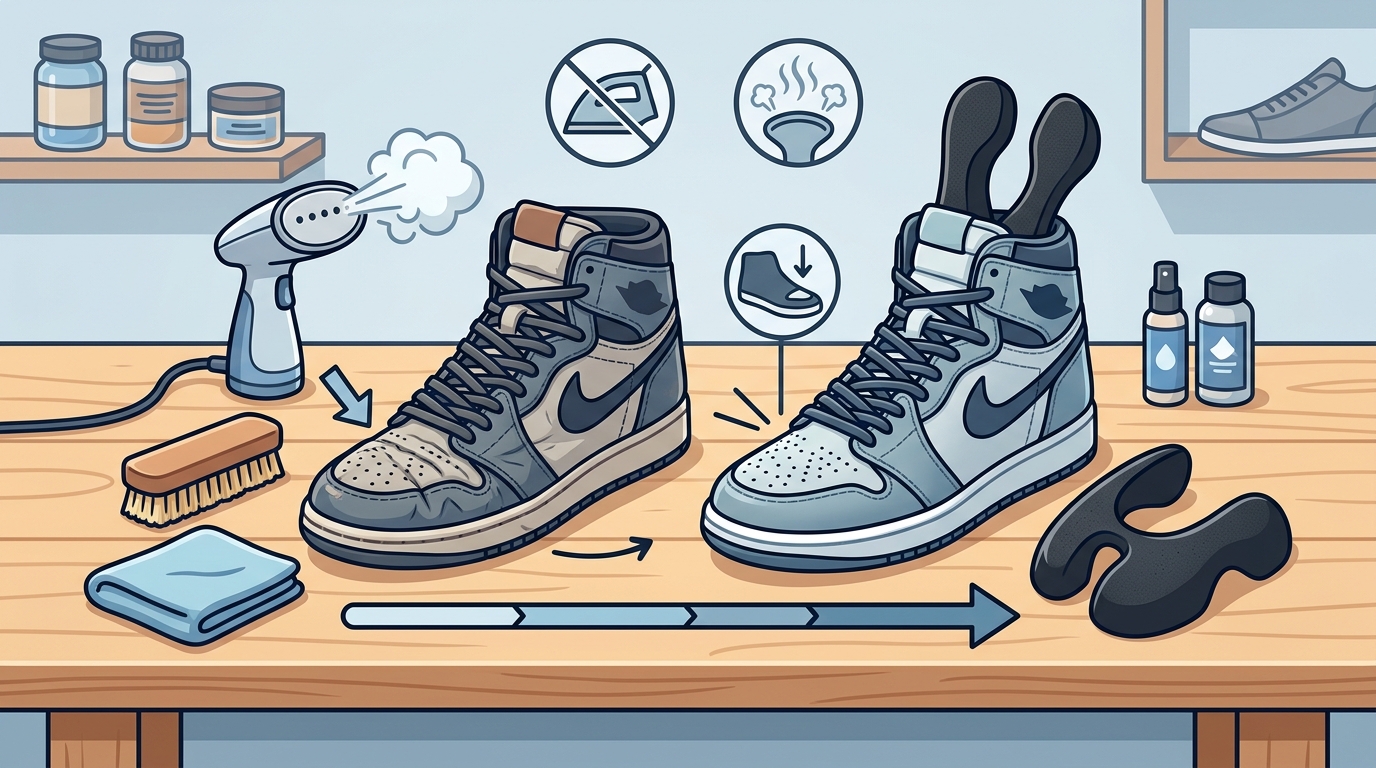
Remove dirt and debris with a soft brush or damp cloth. Particles trapped in creases can scratch the material during treatment.
Stuff the Shoes
Pack the toe box firmly with balled-up newspaper, socks, or a shoe tree. This pushes creases to the surface and provides a smooth working area. Keep the shoe stuffed throughout cooling to lock in the restored shape.
Remove the Laces
Taking out the laces gives you unobstructed access to the creased area and prevents heat damage to the lace material.
Method 1: The Damp Towel and Iron Technique
Ironing is one of the most effective ways to remove deep creases, especially on leather and synthetic sneakers. The combination of heat and moisture softens the material so it can stretch back to its original form.
Step-by-Step
- Stuff the shoe tightly with newspaper or a shoe tree.
- Dampen a thin cotton cloth or towel and place it over the creased area.
- Set your iron to low heat. Never use high heat.
- Gently press the iron over the cloth for 5 to 10 seconds at a time.
- Lift, check, and repeat until the crease smooths out.
- Leave the shoe stuffed until it cools completely.
Important: Never let the iron touch the shoe directly. The damp towel acts as a buffer that prevents scorch marks. This method works best on leather shoes but should be avoided on suede and mesh.
Method 2: Blow Dryer and Massage
A blow dryer is a safer, beginner-friendly alternative to an iron. A blow dryer method is a crease-removal technique that uses controlled warm air to soften shoe material for reshaping.
- Stuff the shoes and place a damp cloth over the crease.
- Set your blow dryer to medium heat and hold it 6 to 8 inches away.
- Move it back and forth over the creased area for 3 to 5 minutes.
- While the material is warm, gently massage the crease with your fingers.
- Let the shoe cool while still stuffed.
This method is suitable for both leather and synthetic materials. For leather shoes, follow up with a leather conditioner to prevent the material from drying out.
Method 3: Steam Treatment
Steam is a gentle approach that works well for sneakers and fabric shoes. You can use a handheld garment steamer or create steam at home with a microwave and damp towel.
- Dampen a small towel, place it on a microwave-safe dish, and heat for 15 to 30 seconds.
- Rub the steaming towel over the creased areas while supporting the inside of the shoe with your other hand.
- Repeat as necessary, reheating the towel between rounds.
- Insert a shoe tree and let the shoe cool.
Be cautious with synthetic materials since excessive steam can cause warping.
Method 4: No-Heat Alternatives
Leather Conditioner
A leather conditioner is a moisturizing product that softens and hydrates leather to reduce crease visibility. Apply a small amount to the creased area, massage it in with a soft cloth, and let the shoe sit overnight while stuffed. This not only reduces creases but also nourishes the material against future damage.
Shoe Trees
Cedar shoe trees gradually stretch the shoe back to its original shape over time. They also absorb moisture and eliminate odor. For best results, insert them after every wear.
Freezer Method
Fill a sealed plastic bag with water, place it inside the shoe at the crease, and freeze overnight. As the water expands into ice, it pushes the crease out. This works surprisingly well for canvas and fabric sneakers.
Method Comparison Table
| Method | Best For | Difficulty | Time | Risk Level |
|---|---|---|---|---|
| Iron + Damp Towel | Leather, Synthetics | Moderate | 10-15 min | Medium |
| Blow Dryer | Leather, Synthetics | Easy | 15-20 min | Low |
| Steam Treatment | Sneakers, Fabric | Easy | 15-20 min | Low |
| Leather Conditioner | Leather, Faux Leather | Easy | Overnight | Very Low |
| Shoe Trees | All Materials | Very Easy | 24-48 hrs | None |
| Freezer Method | Canvas, Fabric | Easy | Overnight | Low |
| Crease Protectors | Sneakers (All Types) | Very Easy | Ongoing | None |
How to Prevent Creases Long-Term
Removing creases is only half the battle. Prevention keeps your shoes looking fresh between treatments.
- Wear crease protectors: Memory foam crease protectors like the Crease Beast Starter Kit support the toe box while allowing your feet to flex naturally, preventing the "duck walk" associated with rigid plastic guards.
- Rotate your pairs: Avoid wearing the same shoes daily. Giving shoes at least a full day of rest lets the material recover its shape.
- Store properly: Keep shoes in a cool, dry place with shoe trees or stuffing. Humidity softens materials and makes them more prone to creasing.
- Buy the right size: Shoes that fit properly crease less because there is no excess material folding over empty space.
- Condition regularly: For leather sneakers, routine conditioning keeps the material supple and resistant to deep-set wrinkles.
For sneakerheads who want the easiest ongoing solution, the Crease Beast Ultimate Kit includes four sizes of memory foam inserts that are reusable across your entire collection, from Air Force 1s to Jordan 1s to Timberlands.
Key Takeaways
- Shoe creases are natural but reversible with the right technique and patience.
- Always stuff your shoes and use a protective cloth barrier before applying heat.
- The iron method is most effective for deep creases on leather, but carries the most risk.
- Blow dryers and steam are safer alternatives that work on most shoe types.
- Leather conditioner and shoe trees offer gentle, no-heat crease reduction.
- Prevention is easier than removal. Crease protectors, proper sizing, and shoe rotation are your best long-term tools.
- Memory foam crease protectors both remove old creases and prevent new ones while keeping your walk comfortable.
Frequently Asked Questions
Can you fully remove creases from old shoes?
Yes, in most cases. Heat-based methods like ironing or blow drying can significantly reduce or fully eliminate creases, especially on leather and synthetic materials. Very deep creases on old, dried-out leather may need multiple treatments combined with conditioning.
Is ironing shoes safe?
It is safe when done correctly. Always use a damp cloth as a barrier, keep the iron on low heat, and never press directly on the shoe material. Avoid this method on suede, mesh, or delicate fabrics.
How long does it take to remove shoe creases?
Most heat methods take 10 to 30 minutes per pair. No-heat methods like shoe trees or conditioner work overnight or over a couple of days.
Do crease protectors actually work?
Yes. Quality memory foam crease protectors support the toe box from the inside, reducing the fold that causes creases. Unlike rigid plastic inserts, memory foam options from Crease Beast let your feet bend naturally.
What is the safest method for expensive sneakers?
The blow dryer method or leather conditioner approach carries the least risk. For ongoing protection, pair those treatments with a reusable crease protector to avoid needing frequent touch-ups.
Can you remove creases from suede shoes?
Suede requires extra care. Steam can work if applied gently, but avoid moisture-heavy methods. A suede brush and shoe trees are the safest combination for suede.
How do crease protectors differ from shoe trees?
A crease protector is an insert worn inside the shoe during use to prevent creasing while you walk. A shoe tree is a form inserted when shoes are not being worn to maintain shape. For best results, use both.
Should I condition leather shoes after removing creases?
Absolutely. Heat-based methods can dry out leather. Applying a leather conditioner afterward keeps the material soft and less prone to re-creasing.
Keep Your Kicks Looking Fresh
Now that you know how to safely remove creases, pick the method that matches your shoe material and comfort level. For the simplest ongoing protection, explore the full Crease Beast collection of premium memory foam crease protectors, available in men's, women's, and kid's sizes. Your sneakers deserve to look as good as the day you unboxed them.