
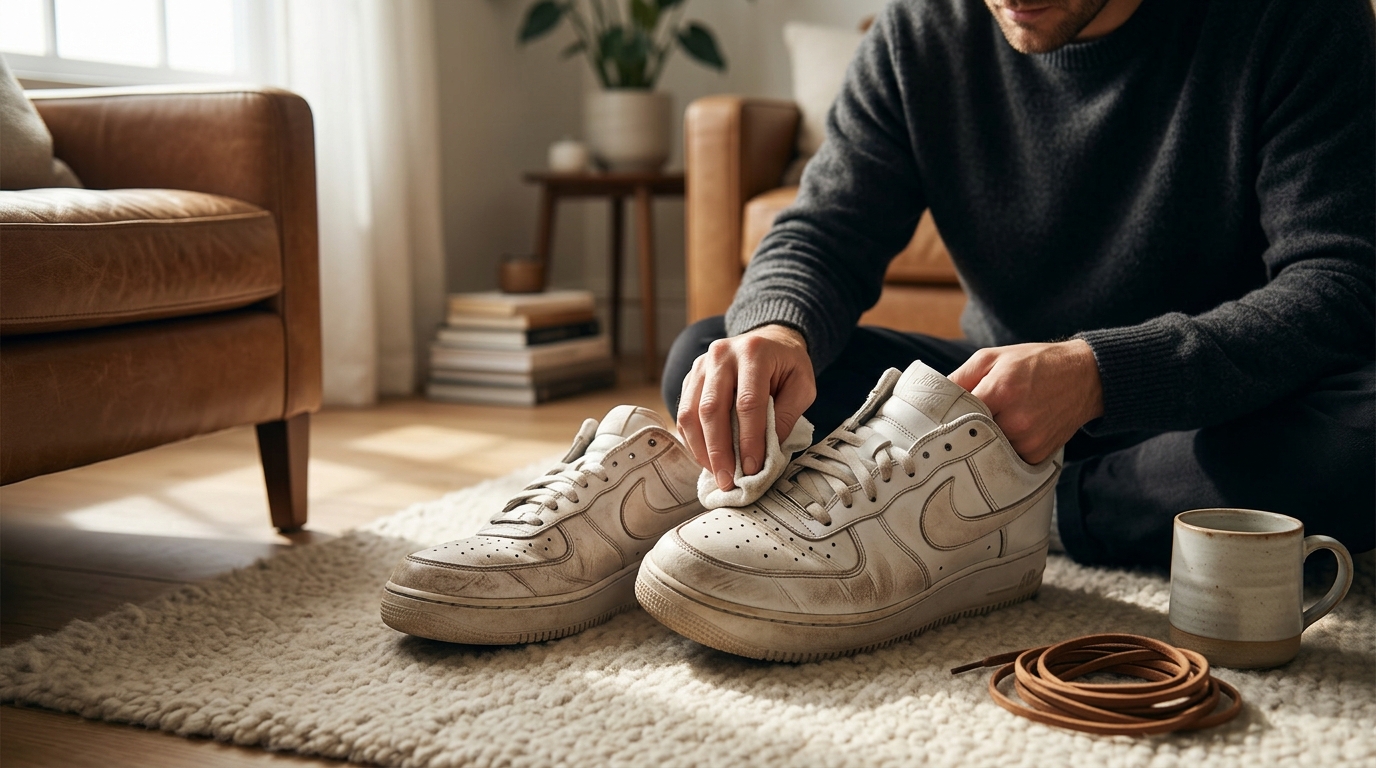
Creases on your favorite sneakers can feel like a death sentence for their style, but they do not have to be. Whether you are rocking Air Force 1s, leather dress shoes, or everyday trainers, creases are a completely normal result of walking and bending your feet. The good news is that you can smooth them out safely at home using simple tools you probably already own. In this guide, we walk you through proven methods to remove creases from old shoes without risking damage to the material, plus how to prevent them from coming back.
Why Do Shoes Crease in the First Place?
A shoe crease is a visible fold or wrinkle in the upper material caused by repeated bending during walking. Every time you take a step, the ball of your foot flexes, and the toe box of your shoe folds along with it. Over time, this repetitive motion compresses the material and creates permanent lines.
Several factors accelerate creasing. Wearing shoes that are too tight or too loose causes extra stress on the upper. Moisture from sweat or rain softens materials like leather, making them more prone to folding. Poor storage, such as tossing shoes in a pile without support, also contributes to unwanted wrinkles.
How to Prep Your Shoes Before Crease Removal
Proper preparation is essential for safe crease removal. Skipping this step can push dirt into the material and cause scratches or discoloration during treatment.
Clean Thoroughly
Use a soft brush or damp cloth to remove all dirt and debris from the surface. Particles trapped in creases during treatment can scratch or embed into the material permanently.
Remove Laces and Stuff the Shoes
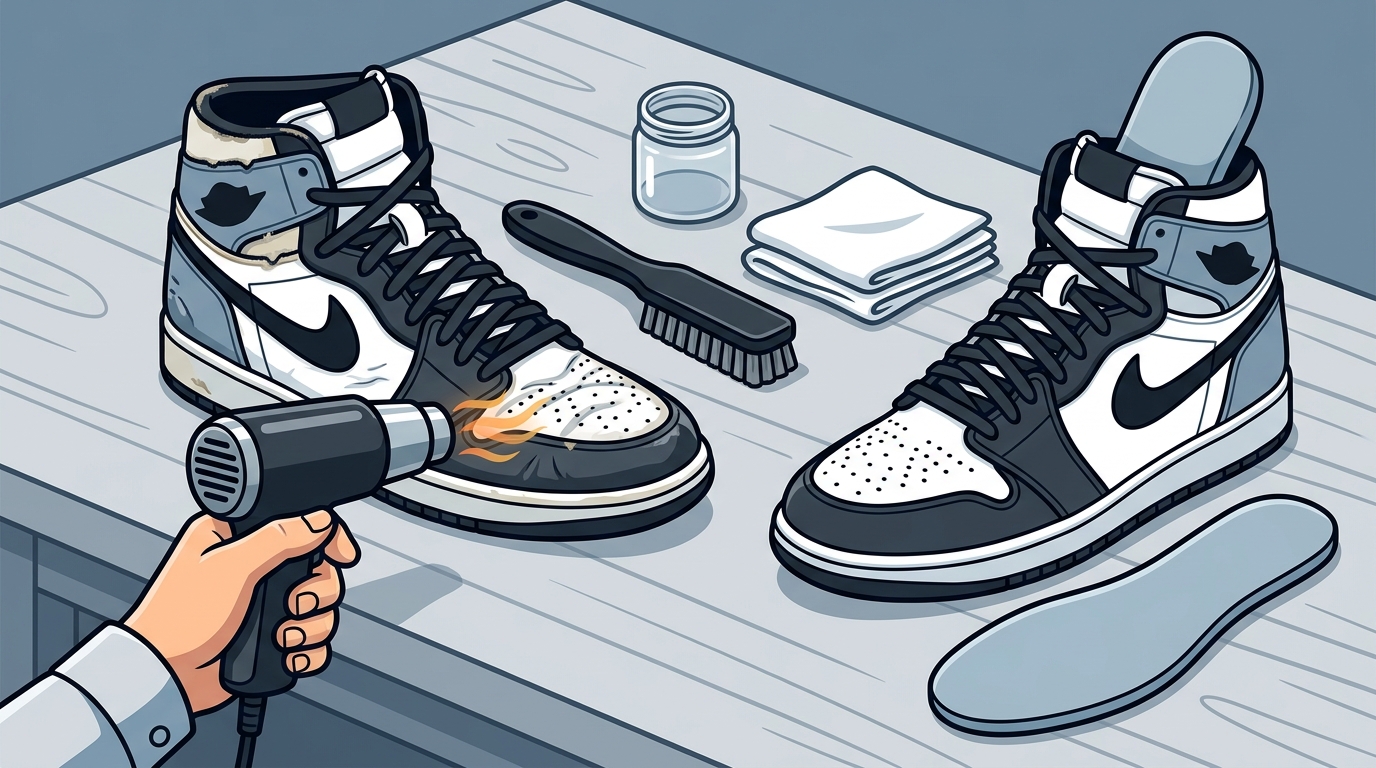
Take out the laces to access the full toe box area. Insert cedar shoe trees or tightly packed newspaper to restore the shoe's original shape. The stuffing stretches creases flat before you apply any treatment, which makes every method far more effective.
Method 1: The Iron and Damp Towel Technique
Ironing is the most popular method for removing shoe creases, and it works especially well on leather. A damp towel is a barrier that protects the shoe from direct heat while generating steam to soften the material.
Stuff the shoe firmly with a shoe tree or newspaper. Dampen a cotton towel with warm water and wring it until just damp. Lay the towel over the creased area. Set your iron to low heat and gently press it over the towel for a few seconds at a time, never holding it in one spot. Remove the towel and let the shoe cool completely with the stuffing still inside, ideally overnight.
Important: Never let the iron touch the shoe directly. As Nike's shoe care guide notes, this method works best on leather shoes and should be used cautiously on suede. Avoid this technique on mesh or knit uppers entirely.
Method 2: Blow Dryer and Shoe Tree Method
A blow dryer is a gentler alternative that works well on both leather and synthetic materials. A blow dryer is a heated styling tool that delivers controlled warm air at adjustable temperatures, making it safer for delicate shoe materials than an iron.
Insert shoe trees into the shoes. Set your blow dryer to medium heat and hold it about six inches from the creased area. Move it back and forth for 20 to 30 seconds, then massage the warmed material with your fingers while it is still pliable. Let the shoe cool completely before wearing. This entire process takes roughly 30 minutes per pair.
After using heat, apply a leather conditioner to prevent the material from drying out. This step is especially important for premium sneakers and dress shoes you want to keep looking fresh.
Method 3: Steam Treatment
Steam treatment is a gentle, effective way to remove creases without applying direct heat to the shoe surface. It works well across leather, fabric, and synthetic materials.
Boil water in a kettle or pot. Hold the shoe about six inches above the steam source for 20 to 30 seconds, letting the vapor penetrate the creased area. Immediately stuff the shoe with a tree or towel to hold its corrected shape, and allow it to dry naturally. Repeat if needed for deeper wrinkles.
Method 4: No-Heat Options for Delicate Materials
Leather Conditioner
A leather conditioner is a moisturizing product that softens and nourishes leather to restore flexibility. Apply a small amount to the creased areas using a microfiber cloth and massage in circular motions. Let the shoes sit overnight with shoe trees inserted, then buff them in the morning for a polished finish.
Rubbing Alcohol Solution
Mix equal parts water and rubbing alcohol. Apply the mixture to the creased areas with a cloth until saturated. Stuff the shoes and let them dry. This option works well for mild creases on canvas or synthetic uppers.
Crease Protectors
For the most reliable long-term solution, memory foam crease protectors from Crease Beast both remove existing creases and prevent new ones. The inserts fill the negative space in your toe box, pushing out existing folds while you walk. Unlike rigid plastic protectors, Crease Beast uses ultra-soft memory foam that lets your feet bend naturally, so you stay comfortable all day.
Crease Removal Methods Compared
| Method | Best For | Difficulty | Time | Risk Level |
|---|---|---|---|---|
| Iron + Damp Towel | Leather shoes | Moderate | 15-20 min | Medium (scorch risk) |
| Blow Dryer | Leather & synthetics | Easy | 30 min | Low |
| Steam | All materials | Easy | 10-15 min | Low |
| Leather Conditioner | Leather only | Easy | Overnight | Very Low |
| Rubbing Alcohol | Canvas & synthetics | Easy | 1-2 hours | Low |
| Crease Protectors | All shoe types | None | Ongoing | None |
How to Prevent Creases Going Forward
Removing creases is great, but preventing them in the first place saves time and keeps your shoes looking newer for longer. Here are the most effective habits:
Use crease protectors daily. Crease Beast's men's crease protectors and women's crease protectors are designed to be worn all day with maximum comfort thanks to their memory foam construction. They work across sneakers, dress shoes, and casual pairs.
Rotate your shoes. Give each pair at least one full day of rest between wears to allow the material to recover its shape.
Store with shoe trees. Always insert cedar shoe trees when your shoes are not being worn. They absorb moisture and maintain the silhouette of the toe box.
Buy the right size. Shoes that fit poorly crease faster. Too tight means extra pressure on the upper; too loose means excess material that folds easily.
Key Takeaways
- Shoe creases are normal and caused by the natural bending of your foot during walking.
- Always clean and stuff your shoes before attempting any crease removal method.
- The iron-and-damp-towel method is the most popular fix for leather shoes but carries some scorch risk.
- A blow dryer or steam treatment offers a safer alternative for all shoe materials.
- Leather conditioner works overnight without any heat for a gentle, low-risk approach.
- Memory foam crease protectors like Crease Beast both fix existing creases and prevent new ones from forming.
- Prevention habits such as rotating pairs, using shoe trees, and wearing the correct size extend shoe life significantly.
Frequently Asked Questions
Can you fully remove deep creases from old shoes?
Deep creases can be significantly reduced but may not disappear entirely if the material has been permanently compressed. Combining heat methods with shoe trees and conditioning gives the best results. Consistent use of crease protectors after treatment helps maintain the improvement.
Does ironing shoes damage them?
Not if you do it correctly. Always use a damp towel as a barrier, set the iron to low heat, and never hold it in one spot for more than a few seconds. Avoid ironing suede, mesh, or knit materials.
What are crease protectors?
A crease protector is an insert placed inside the toe box of a shoe to prevent the upper from folding during walking. Crease Beast's version uses premium memory foam instead of rigid plastic, which allows natural foot movement while keeping creases at bay.
Do crease protectors work on already-creased shoes?
Yes. The memory foam fills the negative space in the toe box and gradually pushes existing creases out over time. Multiple Crease Beast customers have reported visible improvement on previously creased Air Force 1s and Dunks.
Which method is safest for synthetic or fabric shoes?
Steam treatment and the blow dryer method are the safest options for non-leather materials. Both deliver gentle, indirect heat that relaxes fabric without risking scorch marks or discoloration.
How often should I treat my shoes for creases?
Treat creases as soon as they appear for the best results. For shoes you wear frequently, a monthly steam or conditioning session keeps them looking fresh. Using crease protectors daily eliminates the need for regular treatments.
Can I use a clothes steamer instead of boiling water?
Absolutely. A handheld steamer works just as well and gives you more control over the steam direction. Hold it about six inches from the shoe and keep it moving to avoid saturating the material.
Where can I buy Crease Beast crease protectors?
Crease Beast products are available at creasebeast.com and on Amazon. New releases and accessories are sold exclusively on the official website. They ship domestically across the USA and internationally to most countries.
Keep Your Kicks Looking Fresh
You have spent good money on your shoes. Protect that investment. Shop Crease Beast's premium memory foam crease protectors today and stop fighting creases for good. Available in men's, women's, and kids' sizes, they work with sneakers, dress shoes, and everything in between. Subscribe to the newsletter for exclusive drops and 10% off your first order.