
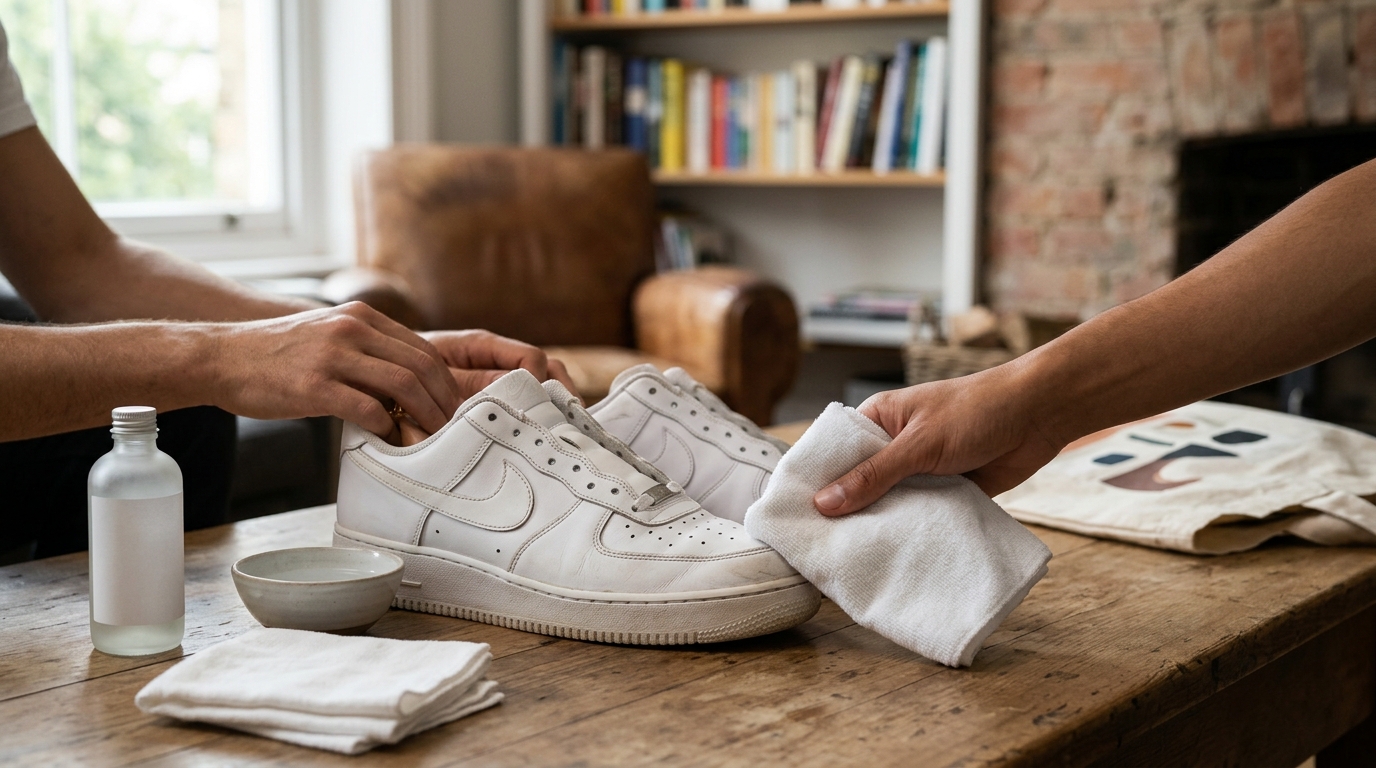
Shoe creases are inevitable. Every step you take flexes the toe box, and over time those folds become permanent eyesores. The good news is that most creases can be reduced or completely removed using safe, at-home methods that won't ruin the material. Whether you own leather dress shoes, everyday sneakers, or synthetic trainers, this guide walks you through proven techniques to restore your kicks. We will also cover the mistakes that cause damage and explain why prevention with premium crease protectors is the smartest long-term strategy.
Why Shoes Crease in the First Place
A shoe crease is a visible fold line that forms when the upper material bends repeatedly during walking. The toe box absorbs most of this stress because your toes and the ball of your foot flex with every stride. Leather, synthetic leather, and even canvas will all develop these lines over time.
Several factors accelerate creasing. Wearing shoes that are too large allows excess material to buckle. Walking in wet conditions softens leather and makes it fold more easily. Wearing the same pair daily without rest compounds the problem. Understanding these causes helps you pick the right removal method and avoid making things worse.
Prepare Your Shoes Before You Start
Before applying any crease-removal technique, clean your shoes thoroughly with a soft brush or damp cloth. Dirt and debris trapped in crease lines can scratch the material during treatment. Remove the laces so you have clear access to the toe box.
Next, stuff the shoes firmly with newspaper, balled-up socks, or a shoe tree. This pushes the creased material outward and gives it a smooth surface to set against. Proper stuffing is critical for every method below.
Method 1: The Damp-Cloth Iron Technique
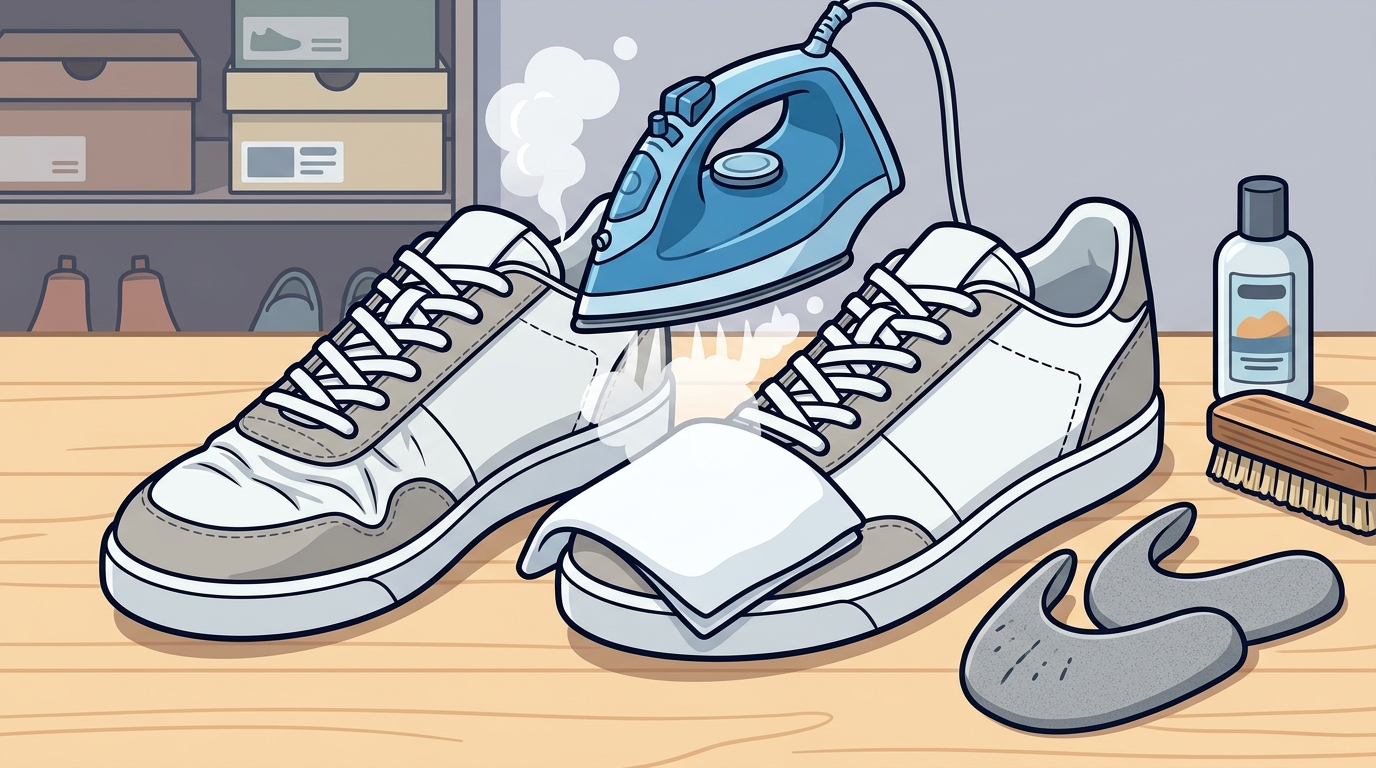
Ironing is one of the most effective ways to remove deep creases from leather and synthetic shoes. A crease protector is a device inserted into the toe box to maintain the shoe's shape, and while it prevents future damage, an iron can fix existing folds right now.
Step-by-Step Instructions
- Insert a shoe tree or stuff the shoe tightly with paper.
- Dampen a cloth (a washcloth works well) and wring out excess water.
- Lay the damp cloth directly over the creased area.
- Set your iron to low heat, around 60 to 80 degrees Fahrenheit.
- Press the iron over the cloth in 10-second intervals.
- Check the crease between each pass to monitor progress.
- Once the crease disappears, leave the shoe stuffed until it cools completely.
Why It Works
The combination of heat and moisture softens the shoe material, allowing it to stretch back into its original shape. The damp cloth acts as a buffer that prevents scorch marks. According to Nike's shoe care guide, you should always use a barrier between the iron and the shoe because direct contact can cause irreparable damage.
Method 2: Blow-Dryer and Shoe Tree Combo
If you do not own an iron or want a lower-risk option, a blow-dryer delivers targeted heat with more control. This method is suitable for both leather and synthetic materials.
How to Do It
- Stuff the shoe with a shoe tree or thick socks.
- Set the blow-dryer to medium heat.
- Hold it 6 to 8 inches away from the creased area.
- Move the dryer back and forth for 3 to 5 minutes.
- While the material is warm, gently massage the crease with your fingers.
- Let the shoe cool while still stuffed.
Because you are applying direct heat, follow up with a leather conditioner to prevent the material from drying out. Shoe care accessories like conditioners pair perfectly with this technique.
Method 3: No-Heat Options for Delicate Materials
Heat has the potential to warp suede, mesh, and certain synthetics. A leather conditioner is a product formulated to soften and nourish leather, helping it flex back to its original form without heat.
Leather Conditioner Method
Clean the shoe, apply a small amount of conditioner to the crease, massage it in with a soft cloth, and let it absorb overnight while the shoe is stuffed. Regular conditioning also keeps leather supple and less prone to future creasing.
Wet Towel Overnight Method
Dampen a small towel, place it over the creased area, and leave it for several hours or overnight. The moisture gradually softens the material so a shoe tree can reshape it without any risk of heat damage. This is ideal for fabric and canvas shoes.
Common Mistakes That Damage Shoes
| Mistake | Why It's Harmful | What to Do Instead |
|---|---|---|
| Ironing without a damp cloth | Direct heat scorches leather and melts synthetics | Always place a damp barrier between the iron and shoe |
| Using high heat settings | Warps material and causes discoloration | Start at the lowest setting and increase gradually |
| Skipping conditioner after heat | Leather dries out and cracks | Apply conditioner after every heat-based method |
| Using harsh chemicals | Degrades shoe material and finishes | Stick to products designed for shoe care |
| Not stuffing shoes during treatment | Material sets back into the crease | Use shoe trees or tightly packed paper |
How to Prevent Creases From Coming Back
Removing creases is only half the battle. Prevention keeps your shoes looking new far longer. The single most effective preventive tool is a crease protector. Crease Beast memory foam crease protectors sit inside the toe box, reinforcing its shape while still allowing your feet to bend naturally as you walk.
Additional prevention habits include rotating your shoes so each pair rests at least one full day between wears, storing shoes with cedar shoe trees to absorb moisture, and keeping them in a cool, dry environment. For kids' sneakers, Crease Beast's kids collection offers sizes designed specifically for grade school sizes 3 through 7.
Pairing crease protectors with Crease Beast premium pocket socks adds another layer of comfort and protection during all-day wear.
Key Takeaways
- Shoe creases form naturally from repeated toe-box flexing and are accelerated by moisture, poor fit, and lack of rest days.
- The damp-cloth iron method is the most effective technique for deep creases on leather shoes.
- A blow-dryer on medium heat offers a safer alternative that works on leather and synthetics alike.
- No-heat methods such as leather conditioner and wet towels are best for delicate materials like suede and mesh.
- Never apply an iron directly to a shoe; always use a damp cloth as a protective barrier.
- Condition leather shoes after every heat treatment to prevent drying and cracking.
- Memory foam crease protectors from Crease Beast are the best long-term prevention strategy.
Frequently Asked Questions
Can you fully remove creases from old shoes?
Yes, most creases can be significantly reduced or fully removed using heat and moisture methods. Very deep, long-standing creases may require multiple treatments or professional shoe restoration.
Does ironing shoes damage them?
Ironing is safe when done correctly. Always use a damp cloth between the iron and the shoe, keep the heat low, and work in short intervals. Skipping these precautions can cause scorch marks or warping.
What is a crease protector?
A crease protector is an insert placed inside the toe box of a shoe to prevent the upper material from folding during walking. Crease Beast crease protectors use premium memory foam that allows natural foot movement while blocking crease formation.
Do crease protectors work on old creases?
Crease protectors are primarily designed for prevention, but inserting them into shoes with existing creases can help gradually flatten folds over time, especially after you have treated the shoes with heat or conditioner first.
Is the blow-dryer method safe for all shoe materials?
It works well on leather and most synthetics. For suede, mesh, or other delicate fabrics, use a no-heat method like leather conditioner or the wet towel technique instead.
How often should I condition leather shoes?
Conditioning every two to four weeks keeps leather supple and less prone to creasing. Always condition immediately after using any heat-based crease removal method.
Can I use a steamer instead of an iron?
Yes. Steam is a gentle alternative that works especially well on sneakers and fabric shoes. Hold the steamer a few inches from the shoe and massage the crease with a cloth as the material softens.
Are Crease Beast protectors reusable?
Yes. Crease Beast memory foam protectors are reusable with most shoes and are available in men's, women's, and kids' sizes.
Ready to Keep Your Shoes Crease-Free?
Removing creases is satisfying, but preventing them saves you time and keeps every pair looking factory-fresh. Shop Crease Beast memory foam crease protectors today and give your sneakers the protection they deserve. Available in men's, women's, and kids' sizes with free shipping on qualifying orders.