
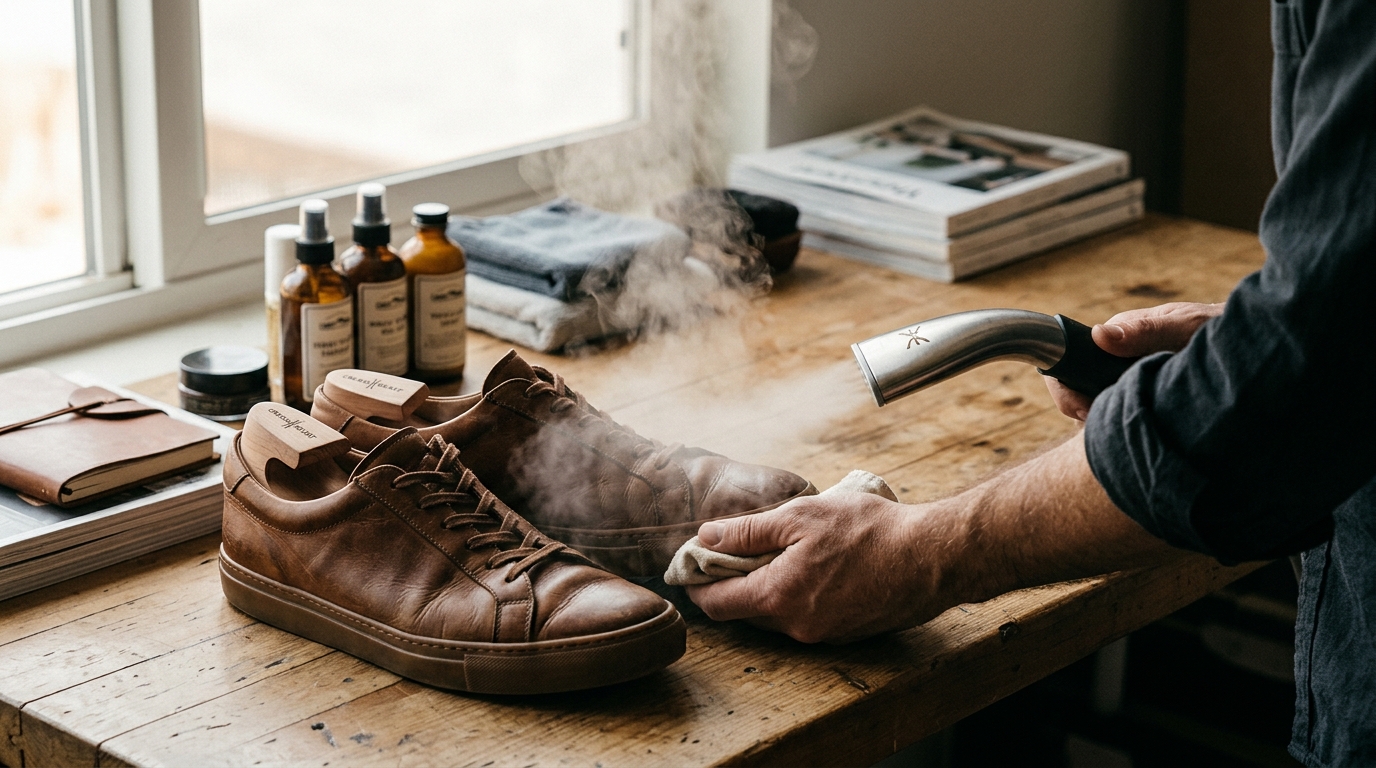
Shoe creases are an unavoidable part of wearing your favorite kicks, but they do not have to be permanent. Whether you are restoring a beloved pair of Air Force 1s or refreshing leather dress shoes, the right technique can reduce visible creasing by 60 to 90 percent without harming the material. In this guide, you will learn five proven methods for removing creases from old shoes safely, plus long-term prevention strategies that keep every pair in your rotation looking fresh. Let's get your sneakers back to near-factory condition.
Why Shoes Crease in the First Place
A shoe crease is a fold or wrinkle that forms in the upper material when your foot flexes during walking. Every step bends the toe box, and over time this repeated motion leaves permanent lines. Creasing is a natural result of wear, not a defect.
Several factors accelerate the problem. Shoes that are too big crease more because extra space allows the material to fold. Poor-quality materials, excess moisture, improper storage, and wearing the same pair daily without rest all make creases worse. Understanding these causes helps you pick the right fix.
Essential Prep Steps Before You Start
Preparation is the difference between a successful restoration and accidental damage. Before applying any method, follow these steps:
Clean the Surface
Remove dirt and debris with a soft brush or damp cloth. Trapped particles can scratch the material or get pressed deeper into creases during treatment.
Stuff the Shoes Properly
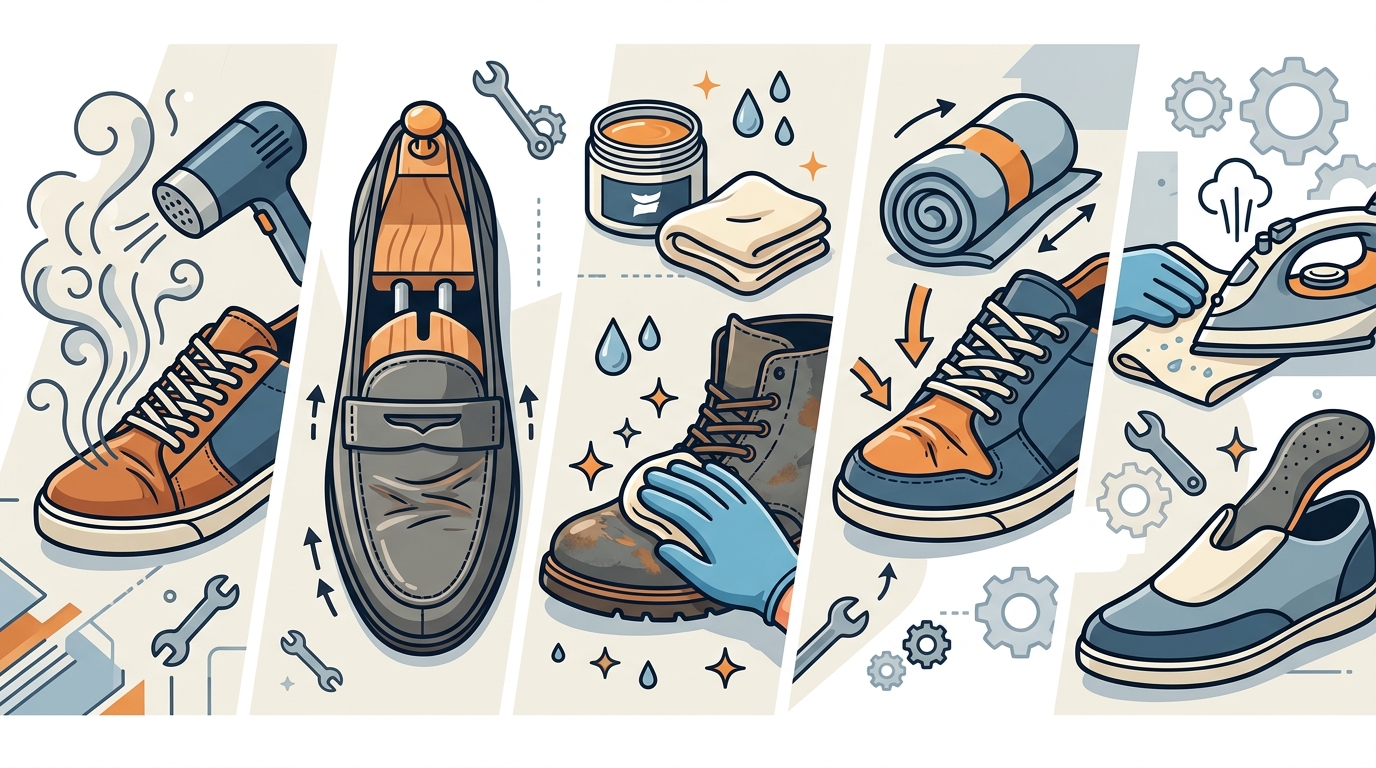
Insert shoe trees or tightly packed newspaper to push creases outward and maintain the shoe's shape. Attempting to remove creases without internal support leads to poor results and can create new deformities.
Test on a Hidden Area
Always test your chosen method on an inconspicuous spot like the tongue or inner side panel before treating visible creases.
Method 1: The Damp Towel and Iron Technique
Ironing is the most popular way to remove shoe creases, and it works especially well on leather and synthetic sneakers. A crease iron technique is the process of applying indirect heat through a damp cloth to soften and reshape shoe material.
Here is how to do it safely:
- Stuff the shoe firmly with a shoe tree or crumpled paper.
- Dampen a cotton towel and place it over the creased area.
- Set the iron to low heat. Never use steam directly on shoes.
- Gently press the iron over the towel-covered crease for a few seconds at a time.
- Check progress, then repeat if needed.
- Leave the shoe stuffed until it cools completely.
The combination of heat and moisture softens the material so it can reshape, while the towel prevents scorch marks from direct contact. This method works best on leather shoes. Use caution with suede and canvas.
Method 2: Hair Dryer for Targeted Heat
If you do not own an iron or want more control, a hair dryer is an excellent alternative. Set it to medium heat and hold it about six inches from the creased area. Move the dryer back and forth in three-to-five-minute intervals.
After warming the material, gently massage the creased area with your fingers to smooth it out. Let the shoe cool while still stuffed. This method is suitable for both leather and synthetic materials, and the entire process takes roughly 30 minutes.
Method 3: Steam Treatment
Steam treatment is the process of using water vapor to gently relax shoe material without direct contact. You can use a handheld garment steamer or hold the shoe above a kettle of boiling water at a safe distance for about 30 seconds.
Once the material feels warm and pliable, press out the crease with a soft cloth. Then insert a shoe tree and let it cool. Be cautious with synthetic materials, as excessive heat can cause warping or melting.
Method 4: No-Heat Approaches
Leather Conditioner
Apply a quality leather conditioner to the creased area and massage it in with a soft cloth. Leave the shoes stuffed overnight. The conditioner softens the leather so it can bounce back naturally, while also nourishing the material to prevent future damage.
Shoe Trees Alone
Cedar shoe trees gently stretch the shoe back to its natural shape over time. This is the slowest but safest method, carrying zero risk of heat damage. As a bonus, cedar absorbs moisture and eliminates shoe odor.
Rubbing Alcohol Solution
Mix equal parts water and rubbing alcohol. Rub the mixture into the creased area, massage the wrinkles, and let the shoes dry for a few hours while stuffed. This works well for mild creases on many materials.
Method 5: Memory Foam Crease Protectors
Crease protectors are inserts that sit inside the toe box to prevent the upper from folding during wear. Unlike traditional rigid plastic protectors, Crease Beast memory foam protectors allow your feet to flex naturally while actively preventing and removing creases.
The Crease Beast Ultimate Kit includes four sizes of memory foam inserts that vary in thickness, so you can match the insert to each sneaker's toe box shape. Unlike single-use alternatives, Crease Beast protectors are reusable across most pairs in your collection, saving money over time.
This is the only method that works passively while you wear your shoes, making it ideal for both prevention and gradual crease removal in old sneakers.
Method Comparison Table
| Method | Best For | Time Required | Risk Level | Heat Needed |
|---|---|---|---|---|
| Iron + Damp Towel | Leather, synthetic sneakers | 15-20 min | Medium | Yes |
| Hair Dryer | Leather, synthetics | 30 min | Low-Medium | Yes |
| Steam | Leather, fabric sneakers | 15-20 min | Medium | Yes |
| Leather Conditioner | Leather, faux leather | Overnight | Very Low | No |
| Shoe Trees | All materials | 24-48 hrs | None | No |
| Memory Foam Protectors | Sneakers, casual shoes | Ongoing/passive | None | No |
Long-Term Crease Prevention Tips
Fixing creases is only half the battle. These habits keep your shoes looking fresh between treatments:
- Rotate your shoes. Let each pair rest at least a full day between wears so the material can recover its shape.
- Store with shoe trees. Always insert shoe trees or stuff shoes with paper when they are not being worn.
- Buy the right size. Properly fitting shoes crease less because there is no excess space in the toe box.
- Use crease protectors daily. Wearing memory foam inserts prevents creases from forming in the first place.
- Keep shoes dry. Moisture weakens materials and accelerates creasing. Let wet shoes air dry naturally, away from direct heat.
Key Takeaways
- Shoe creases are natural but can be reduced by 60 to 90 percent with the right method.
- Always stuff shoes before attempting any crease removal technique.
- The iron-and-damp-towel method is the most effective for deep creases in leather.
- A hair dryer offers more control and lower risk than an iron.
- No-heat methods like leather conditioner and shoe trees are safest for delicate materials.
- Memory foam crease protectors from Crease Beast work passively to both prevent and remove creases.
- Prevention habits like rotation, proper fit, and correct storage extend the life of every pair.
Frequently Asked Questions
Can you fully remove creases from old shoes?
You can significantly reduce visible creasing, though well-worn shoes may not return to factory-fresh condition. Most methods reduce creases by 60 to 90 percent depending on the material quality and crease age.
Is it safe to iron shoes?
Yes, if you place a damp cloth between the iron and the shoe and use a low heat setting. Never let the iron touch the shoe directly, as this can cause scorch marks or melting.
What is the safest method to remove shoe creases?
Using shoe trees or a leather conditioner carries the lowest risk because no heat is involved. These methods take longer but will not damage delicate materials.
Do crease protectors actually work?
Yes. Crease protectors sit inside the toe box and prevent the upper material from folding. Crease Beast protectors use memory foam instead of hard plastic, allowing natural foot movement while keeping shoes crease-free.
How long does it take to remove shoe creases?
Heat-based methods like ironing or using a hair dryer typically take 15 to 30 minutes of active work plus cooling time. No-heat methods require overnight to 48 hours.
Can I use these methods on suede shoes?
Use caution with suede. Avoid excess moisture and never apply an iron directly. A gentle steam treatment or shoe trees are the safest options for suede.
How often should I treat my shoes for creases?
Treat creases as soon as you notice them, since newer creases respond better than old, set-in ones. For ongoing protection, use Crease Beast accessories and shoe trees daily.
Are Crease Beast protectors reusable?
Yes. Unlike single-use crease guards, Crease Beast memory foam protectors are designed to be reused across most shoes in your collection. They are available in men's, women's, and kid's sizes.
Keep Your Kicks Looking Fresh
You now have every tool and technique you need to restore creased shoes safely. For the easiest long-term solution, grab a Crease Beast Ultimate Kit and protect every pair in your rotation with comfortable, reusable memory foam inserts. Your sneakers will thank you.